
Author name: pankajbesarwal

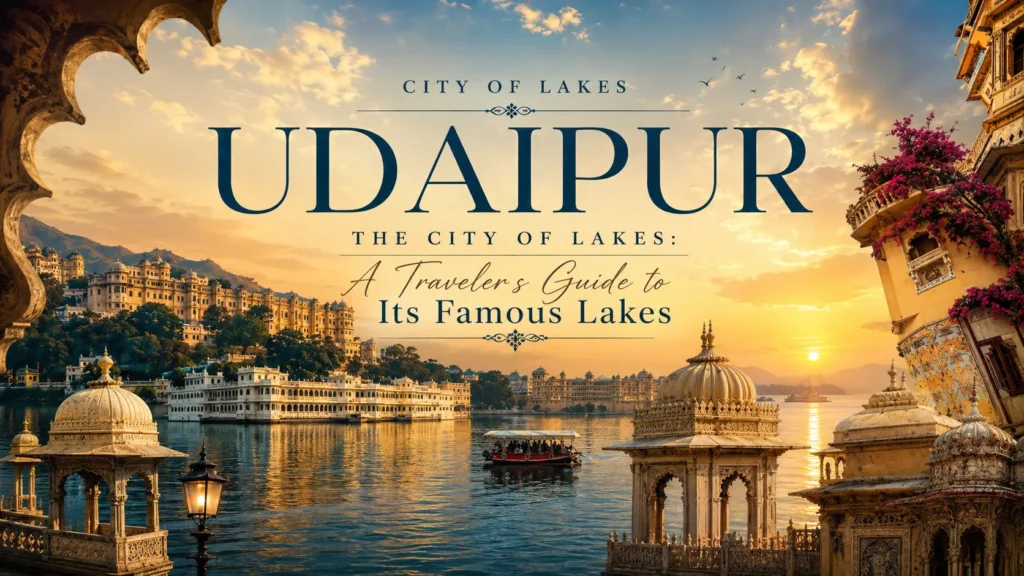
Udaipur, the City of Lakes A Traveler’s Guide to Its Famous Lakes
Blog

Udaipur, the City of Lakes: A Traveler’s Guide to Its Famous Lakes

Udaipur is a beautiful city situated in the green Aravalli region famous for its gorgeous looking lakes. These azure lakes studded with stunning palaces and beautiful scenery are the crowning glory of this fairy tale city. All the lakes have something different to tell about Udaipur’s captivating stories and culture. Udaipur can best be visited in the winter months from October to March, when the temperatures are warm and comfortable for carrying out sightseeing activities. Although the rains from July to September are well received since they beautify the place thanks to increased vegetation, they do not make it suitable for exploration. To enjoy Udaipur in its full glory, book your stay in Lake Facing Hotels In Udaipur or Lake Side Hotel In Udaipur. These hotels provide the best views of the lake and are synched with the other places of interest within the city. Take professional shots of yourselves in front of the picturesque lakes and beautiful palaces. The golden hour when the sun sets itself is the best time to click pictures. Please be mindful of nature and local traditions. Do not throw litter around or use products that are hazardous to the environment. Treat yourself to the scrumptious Rajasthani food which is delicacy that generations have enjoyed. Do not miss out on the local markets and bazaars for exclusive souvenirs and handicrafts. Revive the by now suppressed culture of Udaipur by participating in their cultural functions and festivals. Go for one day excursions to adjacent sites such as Chittorgarh Fort and Kumbhalgarh Fort. If you adhere to these suggestions and visit the mesmerizing lakes of Udaipur, then you will have an extraordinary travel experience. A visit to these water bodies and you are in a land of love, splendor, and nature at its best. Lake Pichola: A Timeless Gem Located in Udaipur here is yet another element of classical architecture and rich heritage in the form of water body- the Lake Pichola. The more serene the lake, the more diversified it is likely to get as many islands are formed inside it. Lake Palace: now, a swank hotel with a serene environment and wow views of the lake and city. The structure of the building is exquisite. Jag Mandir Palace: This historical island palace is decorated with delicate artistic elements and flowered gardens demonstrates the city’s royal features. This palace could be witnessed from a boat, which helps you visualize how great it was in the past. Jag Niwas: It suggests how lavishly the Maharana’s lived. Administratively a heritage hotel now but still stands out magnificently. A boat tour around Lake Pichola should not be missed. When on the boat, all the lovely views of the lake consisting of the city palace, the Aravalli Hills, and other palaces built on the lake will be haunting you. Fateh Sagar Lake: Loney Beauty Fateh Sagar Lake is an artificial lake formed for the water supply to the city. The lake is beautiful and calm, and is bordered by beautiful green mountains, making it a great place to get away from the busy city. Nehru Park: An attraction on the lake that gives a wonderful view of the city as well as the hills on the horizon. One can take walk or simply have lunch there. Boat Rides: The lake offers a calm boat ride where people can enjoy nature and watch the sky as golfers pray the wind does not blow. Udai Sagar Lake: Where Wonders Abound Udai Sagar Lake, this lake is visually appealing with a fun history attached to it. Being surrounded by hills, it provides peaceful and relaxing locations for people looking for calm. Badi Pol: This is an ancient gate which provides interesting perspectives of the lake and the city advancing towards it. Picnic Spots: More than a few pinic spots can be found around the lake and they provide a very lovely environment and atmosphere for friends and families to spend their day out. Other Lakes of Interest Doodh Talai Lake – This beautiful lake is famous because of its clear blue water. It is one of the best places for boating and has facilities for picnics. Swaroop Sagar Lake – This is a smaller lake but has great ambience for peace and quiet, very ideal for people seeking seclusion from the general hustle. Best Time for Visit Udaipur The best time to plan a visit to Udaipur is from the month of October to the month of March since this is the winter season and the weather is nice during this time of the year for a sightseeing tour of the city. On the other hand, the monsoon season (from July to September) brings with it greenery and a certain degree of romance to the city landscape which would quite suit nature lovers. Tips for Travelers Accommodation: For an even closer experience of the beauty of Udaipur, it is recommended to book accommodations at Lake Facing Hotels In Udaipur or Lake Side Hotel In Udaipur. The panoramic lake views are coupled with easy reach to the rest of the city. Photography: Be sure to take pictures of the breathtaking views of the lakes and palaces around you as the sun begins to set, also known as the golden hour, which is the ideal time for perfect snapshots. Social Responsibility: Do not engage in activities that may defile our environment or the local community. Do not waste. Use environmentally friendly goods. Cuisine: Try the tasty and mouth watering Rajasthani dishes and enjoy the wonderful flavors that have existed for years. Shopping: Don’t forget to hunt for local handicrafts when visiting the local markets and bazaar. Cultural Experiences: Visit cultural festivals and events to witness Udaipur’s culture more deeply. Day Trips: Go on short excursion tours to places of interest in the neighbourhood such as Within a reasonable distance, Chittorgarh Fort and Kumbhalgarh Fort. By following these tips along with the charm of the lakes at Udaipur, one can surely make a great travel
History of khatu shyam ji
Blog

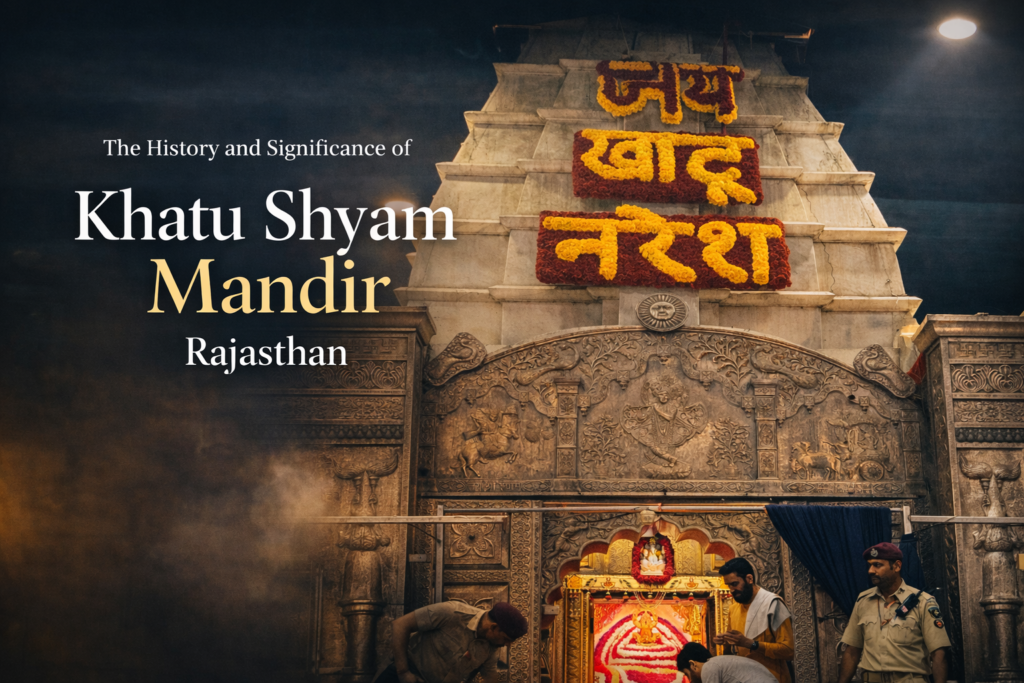
Khatu Shyam Ji History You Must Know

Every year, millions of people walk barefoot across the dust of Rajasthan, saffron flags on their shoulders, chanting two syllables: Shyam, Shyam. They are not heading to a grand royal monument or a celebrated wonder. They are walking toward a small marble temple in a quiet town called Khatu, in Sikar district, to bow before a deity who is worshipped not as a whole body, but as a severed head.That single fact tells you this is no ordinary story. To understand Khatu Shyam Ji, you have to travel back to the Mahabharata, to a warrior so powerful he could have ended the greatest war in Hindu mythology in a single minute, and to a sacrifice so complete that Lord Krishna gave the young man his own name. This is the full history of Khatu Shyam Ji -the legend, the temple, and the reason a fallen warrior became one of India’s most beloved gods. Who is Khatu Shyam Ji? Khatu Shyam ji also known as Sheesh Ke Daani which means the donor of his head. He is worshipped as the epitome of selflessness and devotion. However, shri khatu shyam ji mandir attracts devotees from around the world. further, his devotees believes that he listens to their prayer, fulfil their wishes and provides solace to fight challenging times. Not only this, but he is also known as the Deity of Kaliyuga. He is seen as a god who understand human struggles and offers unconditional love and guidance. Apart from that, his story teaches us profound lessons in sacrifice, humility and importance of serving humanity. Who Was Barbarik, the Warrior Behind Khatu Shyam? Long before he became a god, he was a boy with extraordinary lineage.Barbarik was born to Ghatotkacha -the half-demon son of the Pandava prince Bhima -and Maurvi (also called Ahilawati), a Naga princess and a skilled warrior in her own right. That makes Barbarik the great-grandson of the Pandavas through Bhima’s line. Warfare ran in his blood, and his mother personally trained him in it.But bloodline alone didn’t make him invincible. His devotion did. Barbarik was a fierce devotee of Lord Shiva. Through intense penance he earned a boon that would define his entire legend: three infallible arrows (the Teen Baan), which is why he is still called Teen Baan Dhari -the bearer of three arrows. Tradition also holds that Agni, the god of fire, gifted him a bow that made him unconquerable across the three worlds. These were no ordinary weapons. Here is how the three arrows worked: The first arrow marked everything Barbarik wished to destroy. The second arrow marked everything he wished to protect. The third arrow then destroyed everything the first had marked, before returning to his quiver. In practical terms, this meant Barbarik could win any battle in moments. When Krishna later asked the assembled warriors how long each would take to finish the Kurukshetra war single-handedly, the legends record answers in days -Bhishma, Drona, Karna, Arjuna all measuring their power in weeks. Barbarik’s answer? One minute. Read Also – Top 7 Must-Visit Heritage Sites in Rajasthan The Vow That Worried Even Krishna Here is where the story turns from a tale of strength into a moral dilemma worthy of the Mahabharata.When war between the Pandavas and Kauravas became inevitable, Barbarik wanted to witness it. He made a promise to his mother before leaving: he would always fight on the side that was losing. To a young warrior, this sounded like pure justice -never crush the weak, always lift the loser.But Krishna saw the catastrophe hidden inside that noble vow. Think it through, as Krishna did. If Barbarik joins the losing side, that side starts winning -which makes the other side the loser. So he switches. Now the other side wins, and he must switch again. He would oscillate endlessly between the two armies, destroying both until nothing remained. The “champion of the weak” would end up the lone survivor of a war that wiped out everyone else. There would be no victory, no dharma restored, no future. Just one man standing on a field of total annihilation.Krishna could not allow that. So he devised a test. The Peepal Tree Test: How Krishna Measured Barbarik’s Power Ambiguous as a humble Brahmin, Krishna approached the young warrior and gently mocked him -how could anyone go to the greatest war in history armed with just three arrows?To prove their power, Krishna challenged Barbarik to pierce every single leaf of the peepal (sacred fig) tree they stood beneath, using a single arrow. Barbarik accepted, closed his eyes, and entered meditation before releasing. In that moment, Krishna quietly plucked one leaf and hid it under his foot.The arrow flew, marked every leaf on the tree -and then began hovering insistently around Krishna’s foot. Barbarik calmly explained: there must be a leaf concealed beneath the Brahmin’s foot, and Krishna should lift it, or the arrow would pierce his flesh to reach its target.Krishna lifted his foot. The hidden leaf was marked too. This was the proof Krishna needed. The arrows were so absolute that even deliberately hidden targets could not escape them. If Krishna tried to hide the five Pandavas to keep them safe, Barbarik’s arrows would still find and destroy them. No strategy could outwit such a weapon.The danger was now crystal clear. Why Did Khatu Shyam Give His Head to Krishna? Having confirmed Barbarik’s terrifying power, Krishna asked the young man which side he intended to support. Barbarik repeated his vow: the losing side. Krishna explained the paradox -that this very promise would lead to the destruction of both armies and leave Barbarik alone.Then Krishna, still in his Brahmin form, asked for a charitable offering (daan). Barbarik, true to his word as a warrior who never refused a Brahmin, promised to give whatever was asked.Krishna asked for his head. Barbarik was stunned -no ordinary Brahmin would demand such a thing. He requested to see the stranger’s true form, and Krishna revealed himself as the divine Lord. (By

Must-See Bikaner Places to Visit for Tourists
Blog

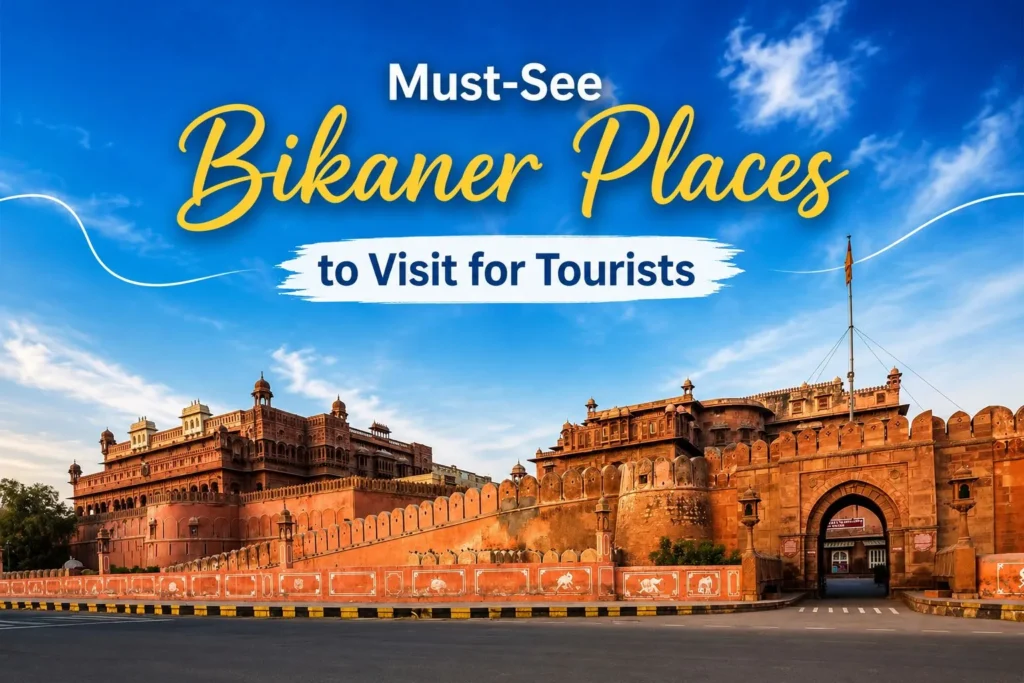
Must-See Bikaner Places to Visit for Tourists

Are you planning a trip to Rajasthan? Then you might have added Jaipur, Udaipur or Jodhpur on your list but are you aiming to explore the hidden gem of Rajasthan? If yes, then you need to visit Bikaner. There are many of the Bikaner places to visit and the city is known for its captivating history, stunning architecture and vibrant culture. This city is a perfect destination for those who are seeking a royal experience. Whether you want to explore forts, taste local dishes or admire the culture, Bikaner is the destination for you. want to know more about Bikaner? Then dive deep into this post. When Is the Best Time to Go to Bikaner? Best time to visit Bikaner is between October and February when the weather is pleasant and cool. These months offer the chance to visit forts, havelis and the Thar Desert environment without the inconveniences of the heat. Temperatures range from around 5°C overnight to a pleasant 25°C during the daytime. By season: October to February (Peak Season) The best time to visit Bikaner is from October to February which is the peak season. The city has a major festival, the Bikaner Camel Festival in January, which is a riot of colour, folk music and cultural performances. The days are lovely and skies are clear. If you want to stay during the event, book your room in advance. March to June (Summer): With temperatures that can go up to 45°C and higher it is not easy to be outside and explore. If you have to go in summer, only go sightseeing early in the morning or late at night. July to September (Monsoon): Bikaner city remains open during the monsoon season from July to September. Hotel prices are dropping and there are few crowds. But travel plans could be disrupted by dust storms Practical tip: Camel safaris are probably best around Raisar or Gajner in November or December when the weather is more consistent, the crowds are tolerable, and the festivals aren’t in full swing. The best time to visit Jaisalmer, Jodhpur and Bikaner in Rajasthan is from November to January. Takeaway: October to February is the best time to visit Bikaner for its weather, festival events and cosy desert sightseeing. How Many Days Are Enough for a Trip to Bikaner? You can easily see the main sights of Bikaner in two full days. If you are planning to go for a camel tour, visit Karni Mata Temple (known as Rat Temple) at Deshnoke or visit Gajner Wildlife Sanctuary you will need three days. This is a useful itinerary breakdown for Bikaner: Day 1: Palaces and Forts The beautiful Junagarh Fort is one of the best preserved forts of Rajasthan. Give yourself at least two to three hours to explore the museum. Then you should head to Lalgarh Palace, a beautiful Indo-Saracenic red sandstone building that is now partially used as a heritage hotel and museum. At the end of the day, treat yourself to some royal history of Bikaner at the Prachina Cultural Centre and Museum. Day 2: Desert, Bazaars, and Havelis Rampuria Havelis are famous for their sandstone carvings & jali work. The old city has a number of spice shops where you can sample local snacks like Bikaneri bhujia and Rasgullas with GI labels. Enjoy a sunset drive to sand dunes or a camel safari. Source – istockphoto Day 3: Day Trips (Optional) You can visit Karni Mata Temple at Deshnoke, which is 30 km away. It is a spiritual experience unlike any other.Gajner Palace and the wildlife sanctuary are ideal for nature lovers and bird watchers.Town of Kolayat is around 50 km away. It is an important religious place especially during the time of Kartik Purnima. Source – istockphoto If you’re just passing through on a long road trip around Rajasthan, two days is enough to make it to Bikaner. If you want to just relax and enjoy the city, 3 days will give you time to do that. Two days is enough to see the best of Bikaner, but three days will give you the full experience, including day-trips and the desert. How to Reach Bikaner? Bikaner is a popular tourist destination in Rajasthan and is well connected by train, road and air to major Indian cities. There are many ways to get there: Air There are a few domestic planes landing at Bikaner’s Nal Airport (BKB). As a result of limited connectivity, most travellers land at Jaipur International Airport (330 km) or Jodhpur Airport (250 km) and then take a train or road. From either city, buses and taxis are easily accessible. By Train There are direct trains from Delhi, Jaipur, Jodhpur, Mumbai, Kolkata, and Ahmedabad to Bikaner Junction, the city’s primary train terminal. Trains are affordable, comfortable, and deposit you right in the heart of the city. By Road The National Highway 11 and NH 15 connect Bikaner with Jaipur (330 kilometers), Jodhpur (250 kilometers), Delhi (490 kilometers), and Jaisalmer (330 kilometers). A regular bus service is operated by the Rajasthan State Road Transport Corporation (RSRTC) between Jaipur and Delhi, as well as private taxis and self-drive options. In Bikaner, you should use auto-rickshaws, bike-rickshaws, or app-based taxis (Ola or Uber may not always be available).Conclusion: Trains are the best way to get to Bikaner; make reservations in advance, especially during October through February. Plan Your Trip: Bikaner Places to Visit List Here is a list of some places that you must visit in Bikaner. Junagarh This is one of the most famous landmarks in Bikaner. The city takes you back to the Mughal and Rajput era by showcasing perfect blend of both Mughal and Rajput architectural styles. You can visit Anup Mahal and Phool Mahal where you can explore intricate carvings and vibrant paintings as well. Not only this, but there is a museum where you can explore historical artifacts, weapons and royal costumes as well. Karni Matal Temple Bikaner is famous for this temple which is

Scroll to Top