
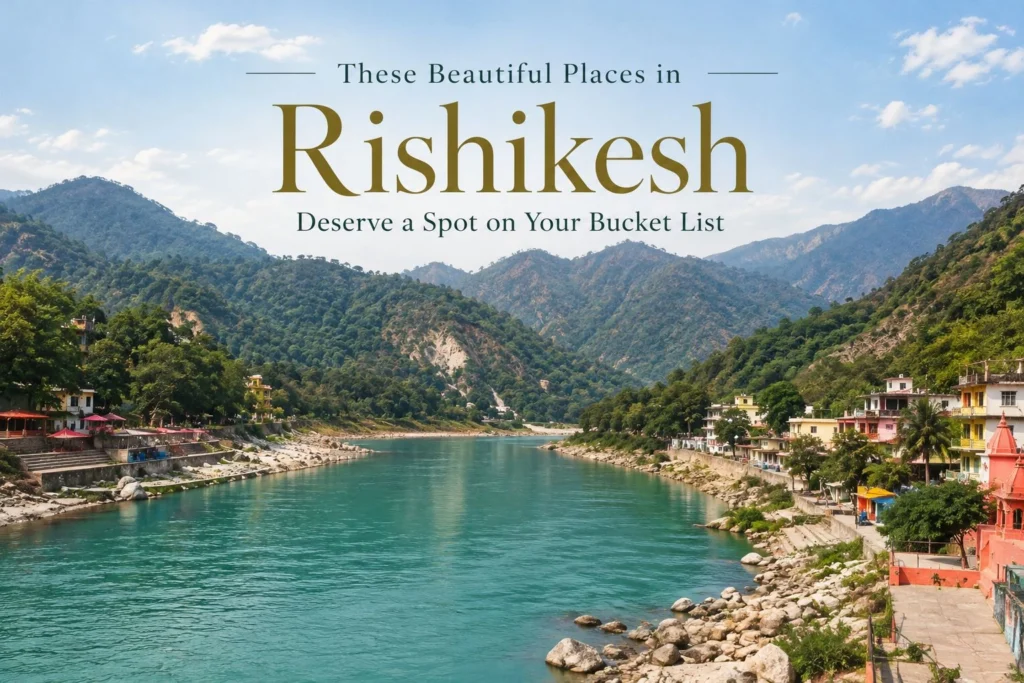
These Beautiful Places in Rishikesh Deserve a Spot on Your Bucket List
Rishikesh is one of the most popular places to visit in Uttarakhand among the tourists because of its holy vibes, surreal weather, taking adventurous and peaceful view on the river banks. The holy city, situated along the banks of the Ganga River in the foothills of the Himalayas, leaves visitors mesmerized, with everything that we can expect from a good tourist destination. There are several attractions in best places to visit in Rishikesh.If you want a vacation that offers you spiritual bliss, adventure, or relaxation then these amazing tourist places in Rishikesh can be very helpful to you in your planning. Top Tourist Attractions to Explore in Rishikesh There are several spiritual sites, natural sites, and sightseeing spots in Rishikesh. The following are some of the must visit places in Rishikesh. Triveni Ghat Source – Magnific Triveni Ghat is considered to be one of the holy places in Rishikesh. Situated on the banks of River Ganges, Triveni Ghat is famous for Ganga Aarti in the evening and it is the place where visitors come to light lamps in Ganga River along with some religious chanting. If you are a tourist looking to experience the spiritual and religious side of Rishikesh, Triveni Ghat is one place you should definitely visit. Laxman Jhula and Ram Jhula Laxman Jhula and Ram Jhula are the two famous bridges over the Ganga River. These bridges are situated in two different locations of Rishikesh and offer scenic views of the river and the surrounding hills. Adjacent to these bridges, the area is filled with temples, ashrams, coffee houses and little markets, which make it one of the most happening places to explore in Rishikesh. Source – Envato Neer Garh Waterfall Neer Garh Falls is a very refreshing sight to visit. People need to trek for some time to reach there, and once there, they would find themselves amidst nature and its serene beauty.This is the perfect place for tourists who wish to get away from the hustle and bustle of the city. Beatles Ashram The Beatles Ashram, officially named the Maharishi Mahesh Yogi Ashram, gained international fame due to the stay of The Beatles in 1968. People visiting here can admire the serene environment, meditation rooms, vibrant paintings, and graffiti present here.It is a rather unique Rishikesh places to visit, particularly for those who have a special interest in music, history, arts, and meditation. Read Also – Places to Visit in Spiti Valley: Must-See Himalayan Gems Parmarth Niketan One of the popular ashrams in Rishikesh is Parmarth Niketan. This place has yoga classes, meditation programs, spiritual events, and other activities related to Indian culture. The presence of the Ganga near this ashram makes it peaceful for spending time there. Best Things to Do in Rishikesh Rishikesh is more than just sightseeing. Rishikesh is also known for its adventures and wellness packages. If you have any questions regarding rishikesh what to do, you may try the following options. River Rafting: River rafting in the Ganga River is considered one of the most thrilling adventure activities in Rishikesh, and different routes depend on the time of the year and the level of difficulty. Bungee Jumping: For lovers of the adventure, Bungee jumping is the fun bridge they give at a great height by the jump through a safe place. Camping: If you are travelling to Rishikesh, then camping will make you experience Nature and peace all around the rivers and the landscapes away from the crowded city. Yoga and Meditation: Rishikesh is well known for its yoga and meditation. People can enrol in classes, take part in activities at the ashram, or simply enjoy the slow-paced activities while travelling. Ganga Aarti: Taking part in the Ganga Aarti ceremony in the evenings is a wonderful experience that people must have while visiting Rishikesh. Best Places to Visit Near Rishikesh With extra time on hand, there are various picturesque places which can also be visited during your travel. Shivpuri One such place that is famous as a campsite and for adventure sports along the river is Shivpuri, situated near Rishikesh. Moreover, it is one of the major places for river rafting. Rajaji National Park Rajaji National Park is an ideal choice for those who are fond of nature and wildlife. It is well known for its forests and wildlife. Haridwar Source – Envato Another spiritual place near Rishikesh is Haridwar, where ghats and temples, along with the evening Ganga Aarti, can be visited. Visiting both Rishikesh and Haridwar together will be an ideal combination for tourists interested in spirituality. Devprayag Devprayag is famous because of the meeting of the rivers Alaknanda and Bhagirathi, from which the river Ganga originates. The beautiful mountain scenery makes it an excellent place to visit for people with more time. Best Time to Visit Rishikesh It may be said that the best time to visit Rishikesh will always depend on your own needs.If you wish to enjoy the cooler temperature and engage in activities such as sightseeing and yoga, then October to February will be perfect for you.If you are looking forward to engaging in adventure activities and want to have a more outdoors experience, March to June would be ideal, but as the days go by, temperatures will get warmer.The months from July to September are marked by monsoon rains. The rainy weather might make travel and adventure less predictable; thus, travellers are advised to look at the weather conditions in advance.October to June is considered the best period for enjoying sightseeing and adventures. How Many Days Are Enough for Rishikesh Generally, a 3-day Rishikesh trip is sufficient for visiting most of the important tourist attractions. The first day can be utilised for touring sites like Triveni Ghat, Ram Jhula, and Beatles Ashram.The second day may be spent participating in adventure sports like river rafting, and then some leisure at the Ganga. The third day could be spent visiting nearby sites like Shivpuri and Haridwar.If you love yoga, go for meditation, trekking, pitching